 A partner you can trust
Stay informed with expert insights, industry trends, and the latest updates to help you make informed decisions.

You inspect the boiler. You check the roof after a storm. But when did you last look closely at the distribution board?
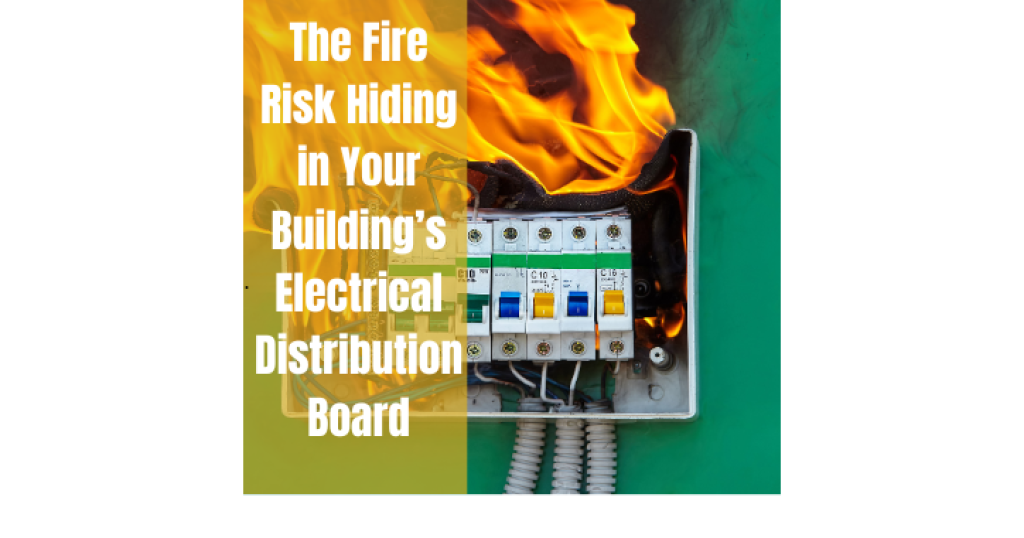
Electrical faults are the biggest identifiable cause of fire in UK workplaces. Not appliances. Not cooking equipment. The fixed wiring, consumer units and distribution boards behind cupboard doors across your portfolio right now.
If your EICR programme runs on autopilot, this is worth a few minutes of your time.
In 2024/25, fire and rescue services recorded 6,665 fires in non-residential buildings across the UK. About 18 percent, roughly 2,126 incidents, came from electrical distribution faults. Not portable appliances. The wiring, distribution boards and consumer units built into the building.
Break it down by sector, and the picture gets sharper. Electrical distribution accounts for around 32 percent of office fires and 28 percent of retail fires. If you manage either type of building, this is your leading fire risk. Not smoking. Not cooking. Wiring.
Every EICR comes back with a coding system. A C1 means immediate danger to people, and it needs fixing straight away, sometimes before the inspector leaves the site. A C2 means urgent remediation is needed before the installation can be called compliant. A C3 is advisory, worth acting on but not urgent.
The problem isn’t usually the inspection itself. Most portfolios get their EICRs done on schedule. The problem is what happens after the report lands on a desk.
An EICR gets filed. The report gets logged. The C2 observation on floor three then sits in an inbox for six months because nobody owns the follow-through.
This gap is common enough that it’s now flagged as a specific weakness across commercial compliance programmes. Facilities managers need a way to track every observation through to resolution, not just to being recorded.
Ask yourself this. Do you know how many open C1 and C2 observations exist across your portfolio right now? If the answer takes more than a minute, you have a gap worth closing.
Buildings that go through regular fit-out work carry extra risk. Every time a tenant alters a space, partitions move, sockets get added, and circuits get extended, the electrical system drifts further from what was originally designed and tested. A five-year EICR cycle doesn’t account for three fit-outs happening in between.
Overloaded circuits follow the same pattern. Office electrical demand has grown past what most buildings were wired for, driven by more equipment per desk, EV charging points and extra server capacity. Extension leads become permanent fixtures instead of temporary fixes. That’s the condition that turns a manageable fault into a fire.
Start with the basics. Confirm every EICR across your portfolio is within its interval: five years for most commercial buildings, three years for anything under heavy industrial load. Pull the last set of observations and check which C1 and C2 items are still open. Look at any space that’s had fit-out work since the last inspection and add it to the schedule early rather than waiting for the next full cycle.
None of this needs a large budget. It needs a system that catches drift before it becomes damage.
Most commercial properties need a new EICR every five years. Buildings under heavy industrial load, or sites with unusual electrical demand, often need one every three years instead. If your property has been through repeated fit-out work, tenant changes or new equipment installs since the last report, book an inspection sooner rather than waiting out the full interval. The interval is a maximum, not a target.
A C1 means the report has found something that poses immediate danger to people, and it needs fixing right away, sometimes before the inspector leaves the building. A C2 is urgent but not immediately dangerous, and it needs resolving before the installation counts as compliant. A C3 is advisory, a recommendation for improvement rather than a compliance requirement.
Commercial landlords carry a legal duty to keep electrical installations safe before letting a property to tenants. In practice, day-to-day responsibility often sits with a nominated facilities manager or responsible person, who tracks inspection intervals, manages contractor access and follows up on remedial work. Ownership of the paperwork matters less than ownership of the outcome.
Yes. An EICR reflects the condition of a building at the point of inspection. Added equipment, EV charging points, extra desks and permanent extension leads all increase load after that report was filed. A pass one year doesn’t guarantee safety three years later if demand on the system has grown without any matching upgrade.



Leave A Comments
Your comment will be reviewed before it appears. Spam protection is active.